Composite Insulators
for Harsh Environments
Composite insulators — also known as polymer insulators — consist of a fiberglass-reinforced polymer (FRP) core rod, HTV silicone rubber weather sheds, and forged steel end fittings. Used in overhead transmission lines and substations from 10 kV to 500 kV for suspension, tension, post, and dead-end applications.
FRP core with HTV silicone rubber housing. 60% lighter than porcelain. Hydrophobic surface for superior pollution performance in coastal, desert, and industrial environments. Cluster-direct from our heritage production base in Zibo.
Where Composite Outperforms Porcelain
Porcelain has its place — but when weight, breakage, or pollution performance drive your decision, composite is the engineer's answer.
60% Weight Reduction
A composite suspension insulator weighs a fraction of its porcelain equivalent. Lower transport costs, faster installation, reduced structural load on towers and poles. Especially critical for helicopter-access lines and difficult terrain.
Zero Breakage Risk
Unlike porcelain, composite insulators won't shatter from gunshots, thrown rocks, rough transport, or mishandling during installation. Zero breakage losses means zero replacement costs and zero project delays.
Hydrophobic Pollution Performance
HTV silicone rubber actively repels water and contaminants. Maintains insulation performance in coastal salt-fog, desert dust storms, and industrial pollution zones — without requiring periodic washing programs.
Complete Composite Insulator Range
Four product families covering post, suspension, dead-end, and specialty applications from distribution to EHV transmission.
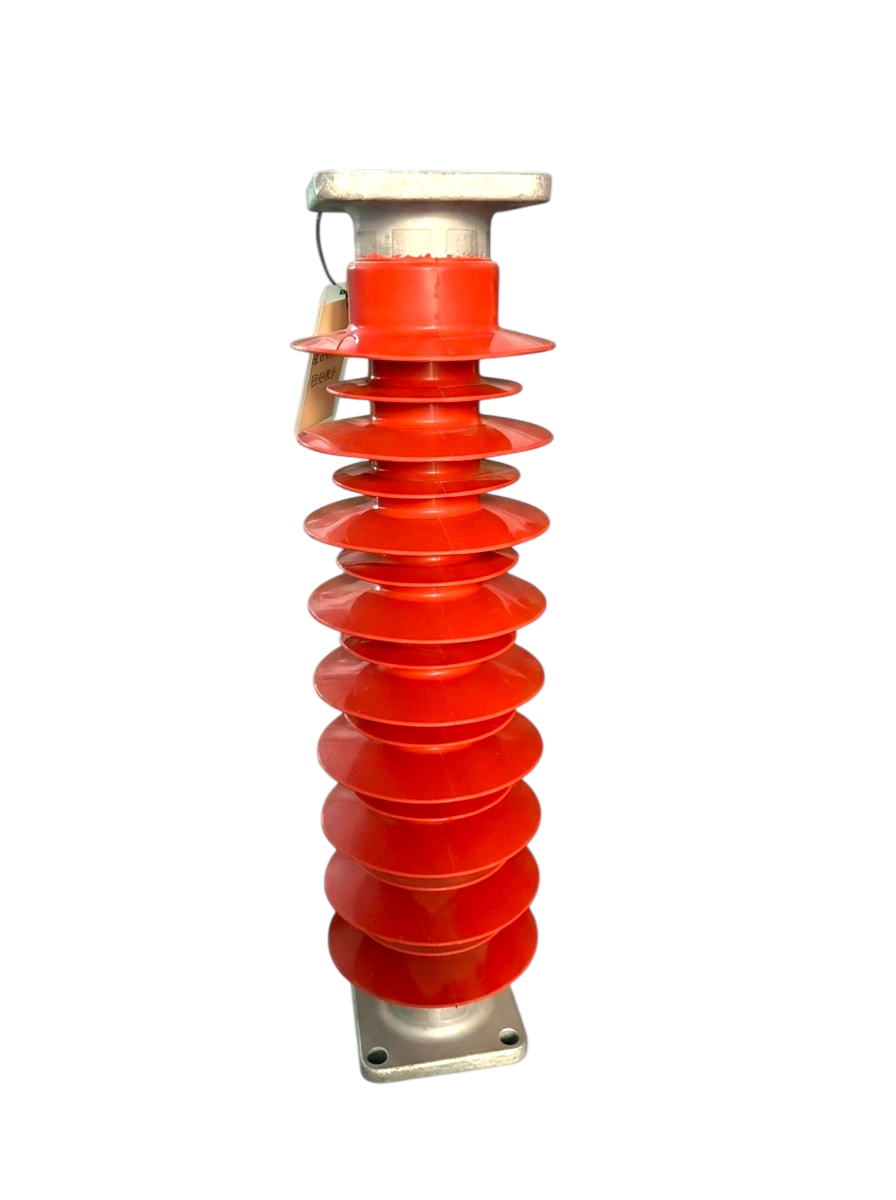
Composite Post Insulators
FRP core + HTV silicone rubber. For substation equipment support and overhead line post applications. Standard and custom configurations.
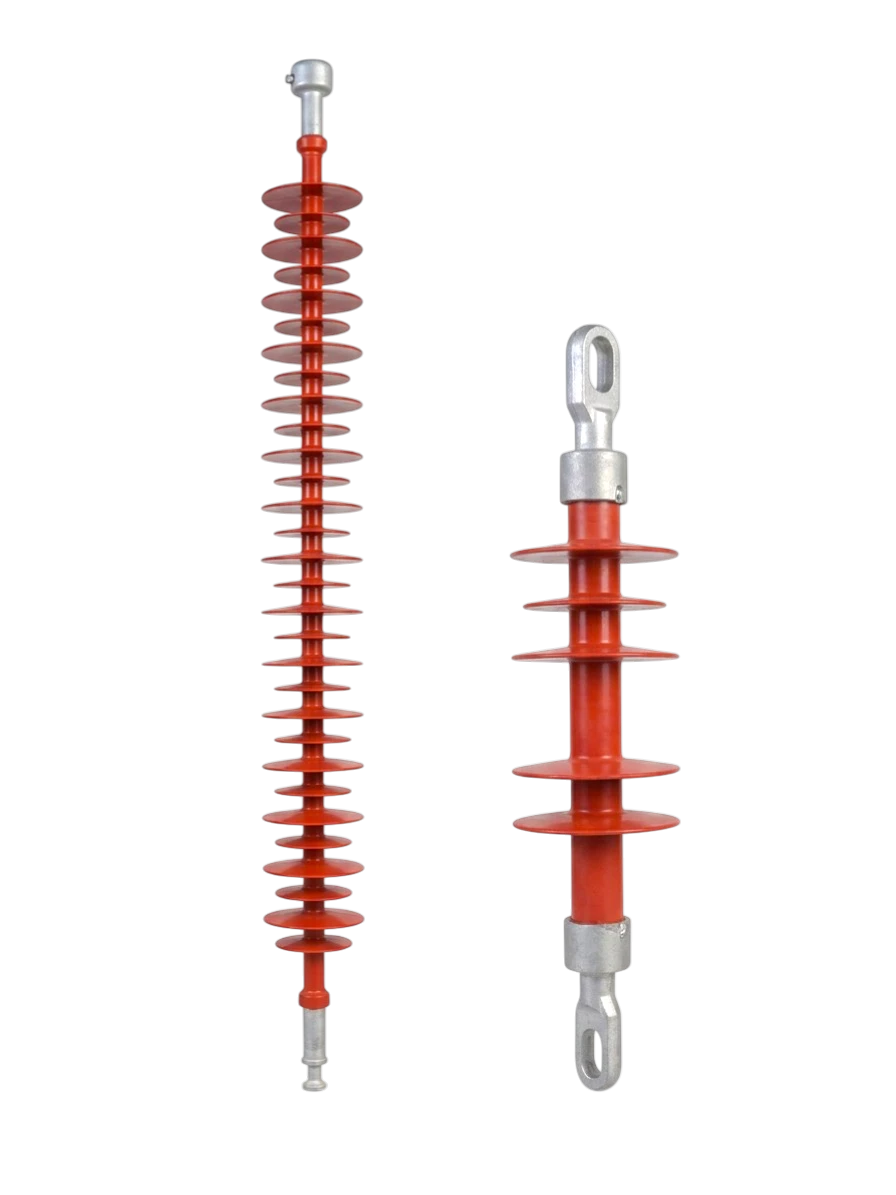
Polymer Suspension Insulators
Long-rod FRP composite with crimped forged steel fittings. Suspension, tension, and dead-end applications. Ball & socket, clevis, tongue, and eye connections.
Composite Pin Insulators
Lightweight replacement for ceramic pin type. 10–15 kV distribution lines. M16/M20 spindle mounting.
Contact Us for Details →Cross-Arm Post Insulators (FSJ)
Horizontal mount with clamp for compact tower design. 66–220 kV. 60–70% lighter than porcelain cross-arms.
Contact Us for Details →International Composite Insulator Standards
All composite products designed, tested, and documented to international standards.
Type-test reports available for all standard configurations. Corona rings supplied for 220 kV+ assemblies. Accelerated aging test data available on request.
For pollution severity and creepage distance guidance, see our IEC 60815 Pollution Severity & Creepage Guide.
Composite Insulator FAQ
We manufacture the full range of FRP core / HTV silicone rubber composite insulators: post insulators (FZSW series, up to 252 kV), suspension and tension insulators (FXB series, 70–300 kN SML, up to 500 kV), distribution dead-end insulators (DDE series, 40–70 kN), composite pin insulators (PIN series, 10–15 kV), and horizontal cross-arm post insulators (FSJ series, 66–220 kV). All products produced at our heritage production base in Zibo.
Composite insulators are 60% lighter than porcelain equivalents, virtually unbreakable during transport and installation, and have a hydrophobic silicone surface that resists pollution buildup. Porcelain offers longer proven field history (100+ years vs 30+ years for composite), inherent UV stability, and fire resistance. Many modern projects use both materials — porcelain for substation posts, composite for line suspension — to optimize lifecycle cost. See our detailed Porcelain vs. Composite comparison guide.
Yes. Our composite suspension and tension insulators comply with IEC 61109. Composite post insulators comply with IEC 61952. All products are also available to ANSI C29.17 (post) and ANSI C29.2 (suspension) standards. Type-test reports are available for all standard configurations.
Yes. Our FXB suspension series covers up to 500 kV with SML ratings from 70 kN to 300 kN. Our FZSW composite post series covers up to 252 kV. For EHV applications above 252 kV, custom configurations are available based on buyer GA drawings. Corona rings are supplied for 220 kV+ assemblies.
Need composite insulators for your project?
Share your voltage class, SML requirement, and application type. Our engineers will recommend the right product family and provide budget pricing within 6 hours.